

QR codes are everywhere today. From roadside billboards and restaurant tables to product packaging and museum exhibits, a simple camera tap opens a digital doorway in seconds. However, if you are planning to create codes for your business, organization, or personal project, you face an important early decision: should you use a static QR code or a dynamic QR code?
At first glance, both formats look identical. They share the familiar square grid of black-and-white modules with three prominent corner squares known as finder patterns. Yet beneath the surface, their internal architecture, cost profile, and privacy implications differ significantly. In this detailed guide, we break down how each type functions, examine their practical pros and cons, and help you select the exact format that aligns with your operational goals.
Understanding the Basics: What Makes a QR Code Work?
Developed in 1994 by Denso Wave, the Quick Response (QR) matrix barcode encodes alphanumeric characters into a two-dimensional grid. When a smartphone camera or handheld barcode scanner reads the code, optical sensors analyze the contrast between dark and light modules, apply mathematical error correction (Reed-Solomon algorithms), and reconstruct the original text string directly in device memory.
The crucial difference between static and dynamic codes is where that reconstructed string leads, and whether the stored content can ever be altered once the matrix is generated.

What Is a Static QR Code? Direct Data in the Matrix
A static QR code encodes your target information directly into the pattern itself. If you enter your website URL, a WiFi password, a phone number, or a plain text note into a static generator, that exact character sequence is translated into the physical layout of the square dots.
Because there is no intermediate server involved, a static code functions like a printed book. Once ink meets paper, the words are set forever. Anyone who scans the code receives the exact payload without querying a third-party redirect service.
Key Advantages of Static QR Codes
- Permanent Lifetime: Static codes never expire. As long as the printed surface remains legible and your target website remains online, the code will continue working for decades without renewals.
- Zero Ongoing Costs: Because static codes do not require server hosting or redirect infrastructure, they are completely free to generate, download, and reproduce in unlimited quantities.
- Absolute Data Privacy: When you generate a static code using a client-side generator, your data remains strictly on your device. No cloud database logs your scans, collects your visitors’ IP addresses, or monitors usage habits.
- Offline Functionality: Many static code types—such as plain text notes, vCards, calendar events, and WiFi credentials—can be processed by a smartphone entirely without an internet connection.
Limitations of Static QR Codes
The primary trade-off with static codes is immutability. If you print 5,000 promotional flyers with a static link and later change your website URL or spot a typo, the printed codes cannot be updated. Furthermore, if you encode a very lengthy URL or comprehensive contact card, the code generates a higher module density, requiring larger print dimensions to remain easily scannable.
What Is a Dynamic QR Code? The Redirect Model
In contrast, a dynamic QR code does not store your ultimate destination inside the matrix pattern. Instead, it encodes a short intermediary link hosted on a third-party server (for example, https://service.com/r/xyz123). When a user scans the code, their browser briefly visits that intermediate server, which immediately forwards them to your target web page.
Because the printed code only points to a short URL, the owner can log into an online dashboard at any time and alter the final destination link without altering the printed graphic.

Key Advantages of Dynamic QR Codes
- Post-Print Editable: You can update marketing landing pages, seasonal promotions, or outdated links long after brochures, signs, or packaging have been distributed.
- Scan Analytics & Telemetry: Dynamic redirect servers can track the total volume of scans, geographic regions, device operating systems, and time-of-day trends.
- Compact Grid Density: Because the embedded URL is consistently short, dynamic codes maintain a clean, open grid pattern with fewer modules, allowing reliable scanning at smaller physical sizes.
Limitations & Risks of Dynamic QR Codes
While dynamic codes offer convenience for enterprise marketing teams, they come with substantial hidden risks:
- Vendor Lock-in & Paywalls: Many commercial dynamic QR providers lure users with free trials, only to deactivate the redirect links months later unless an ongoing monthly subscription ($15 to $50/month) is maintained.
- Single Point of Failure: If the dynamic service experiences server downtime, changes its pricing structure, or ceases operations, every physical code you ever printed becomes completely broken.
- Visitor Privacy Concerns: Because every scan routes through a centralized tracking server, user metadata, device identifiers, and locations are collected.
Side-by-Side Architectural Comparison
| Feature | Static QR Codes | Dynamic QR Codes |
|---|---|---|
| Destination Editing | Permanent (cannot change after generation) | Editable anytime via web dashboard |
| Code Lifespan | Permanent (never expires) | Dependent on active vendor hosting subscription |
| Scan Analytics | None (requires on-site web analytics like UTM tags) | Built-in server-side scan counters & telemetry |
| Third-Party Dependency | Zero (direct peer-to-peer decoding) | High (relies on continuous redirect server uptime) |
| Cost | 100% Free with no renewal fees | Typically requires recurring monthly/annual fees |
| Privacy & Security | Total confidentiality; no external data logging | Intermediate redirect captures user telemetry |
How to Choose: Which Option Fits Your Project?
Choosing between static and dynamic codes comes down to one simple question: do you need to change the destination URL after printing, and are you willing to maintain an ongoing subscription to guarantee that code stays alive?
Choose Static QR Codes When:
- Printing Permanent Signage: Building plaques, product packaging, user manuals, equipment service tags, and business cards should never rely on third-party redirect services.
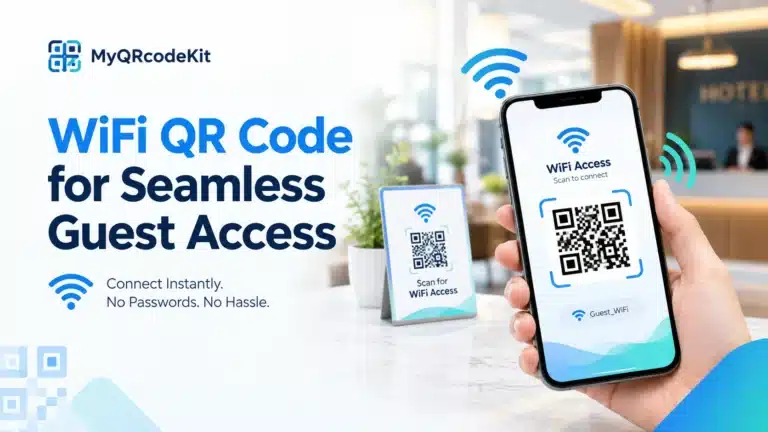
- Sharing WiFi Credentials: Guest network logins are processed locally by the phone’s operating system. Static codes are the worldwide standard for WiFi access.
- Budget and Independence Matter: If you want to create vector SVG graphics for marketing and never worry about unexpected billing notifications, static codes are the clear winner.
- Privacy Is Paramount: If you value your visitors’ confidentiality and do not want their scanning habits aggregated in commercial marketing databases.
Choose Dynamic QR Codes When:
- Running Temporary Ad Campaigns: Billboards, magazine ads, or television spots where campaigns rotate weekly or monthly.
- A/B Testing Destinations: Marketing teams testing different landing page variations to optimize conversion rates.
- Space-Constrained Prints: Very small surfaces (such as jewelry tags) where a short URL grid is necessary for optical readability.
Summary: The Power of Independent Generation
For most small businesses, venue operators, educators, and creators, static QR codes combined with standard website analytics deliver the ideal blend of durability, privacy, and zero maintenance. By generating standard-compliant static codes directly in your browser, you retain complete ownership of your physical media and ensure that your links remain dependable for years to come.
Leave a Reply